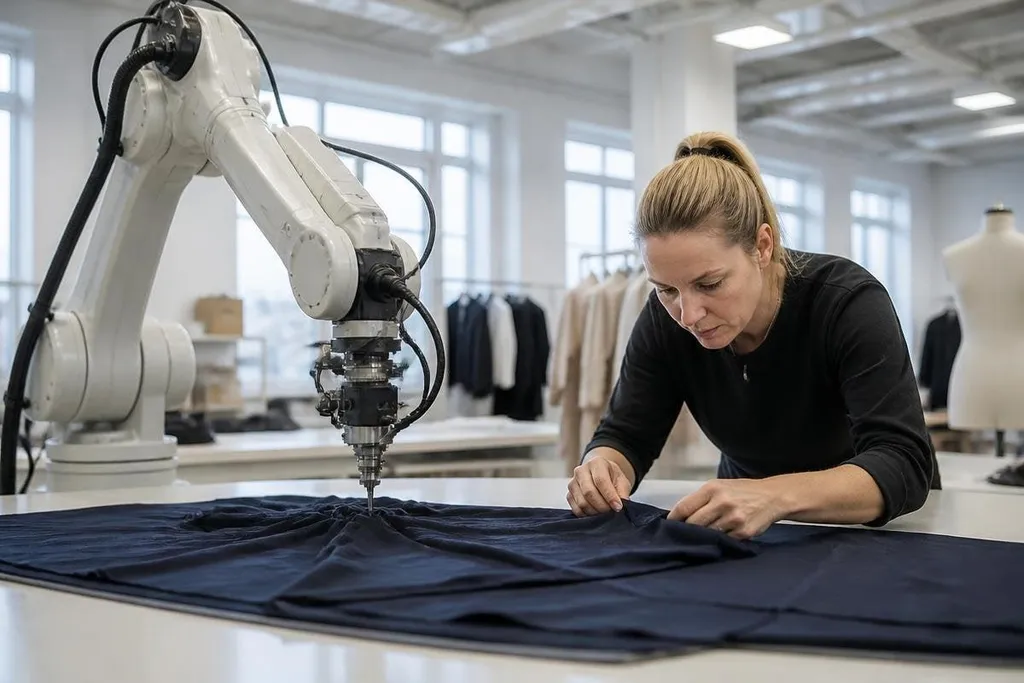
Fashion robots can cut fabric, move garments, guide sewing tools, and sort finished pieces. Their value depends on the task: hard, repeatable steps suit robots better than soft fabric that shifts under small changes in tension.
- Robots can repeat fixed motions with steady timing
- Soft materials make gripping and alignment harder
- A human check remains necessary for fit, finish, and safe work
Where robots can help
A fashion robot works best when the work area, material, and motion stay close to the same shape each time. Cutting tables, fabric spreading, pressing, packaging, and part movement can all follow set paths, so a robot arm or other automated system has a clear task to repeat.
Repeatability can reduce small timing changes between workers and shifts. It can also keep people away from hot pressing surfaces, sharp cutting tools, or long periods of the same arm movement. Those gains only count when the robot can detect a fault and stop before damaged material reaches the next step.
The task must be measured before a company buys equipment. A robot that moves fabric well on a flat table may struggle when the same material folds, stretches, or sticks to another layer.
Why fabric is hard for robots
Metal parts keep their shape. Fabric does not. A robot must deal with wrinkles, loose edges, changing thickness, and surfaces that can slide or cling to a gripper.
That makes sensing as important as arm movement. Cameras can check position, while force sensors can detect contact. The control software then needs to change the motion when the material moves, rather than follow one fixed path until the seam misses its mark.
Sewing adds another limit. The robot must hold layers in place while a needle passes through them at a steady path. Small errors can change seam width, pull the cloth, or damage the edge. A human operator can often see and correct that shift at once; an automated cell needs sensors and a clear recovery step.
The business risks
The purchase price is only one part of the cost. A factory also needs space, staff who can set up and repair the equipment, software updates, spare parts, and a plan for work that falls outside the robot’s approved task.
Training matters because a robot cell changes the work around it. Some manual jobs may shrink, while new jobs appear in setup, quality checks, maintenance, and process planning.
The effect depends on the task and the factory, so a broad claim about job growth or loss would need evidence from a named site.
Safety needs its own review. A moving arm, cutting tool, heated surface, or sewing needle can hurt someone when a sensor misses an object or a person enters the work area. Guards, emergency stops, speed limits, and worker training must match the machine and the space around it.
A report about a fashion robot should name the task, machine, test setting, and human role. Robot24.com fashion robotics reports can supply that record before you judge what the machine has proved and what remains unproven.
What remains unproven
A demonstration can show one garment and one material. It does not show how the system handles new sizes, fabric batches, damaged pieces, or a rush change in the production plan.
The missing test is often recovery. When a sleeve slips or two layers separate, can the robot detect the fault, stop safely, and resume without a worker rebuilding the setup? If the answer is no, the robot may still help with a narrow step, but it cannot run that step without close supervision.
I’d treat fashion robots as task tools, not full sewing replacements, until a supplier shows repeatable results across the materials and garment types a factory actually uses.
A buying checklist
Before approving a pilot, ask the supplier to show:
- The exact materials and garment parts the system can handle
- The measured error rate for cutting, placing, or sewing
- The recovery action after a slip, jam, or sensor fault
- The staff time needed for setup, cleaning, and repair
- The safety layout, stop controls, and worker training plan
A pilot should use real production pieces, including awkward sizes and material changes. Record good output, failed pieces, stop events, repair time, and worker checks across the full trial. That record gives the factory a better answer than a smooth demonstration.
Fashion robots make the most sense where the task stays fixed and the material stays controlled. The next decision is practical: which single step can run safely with fewer manual corrections, and can the factory measure that result from the first day?